The Art of Being Still: How Meditation Can Change the Way You Experience Your Mind
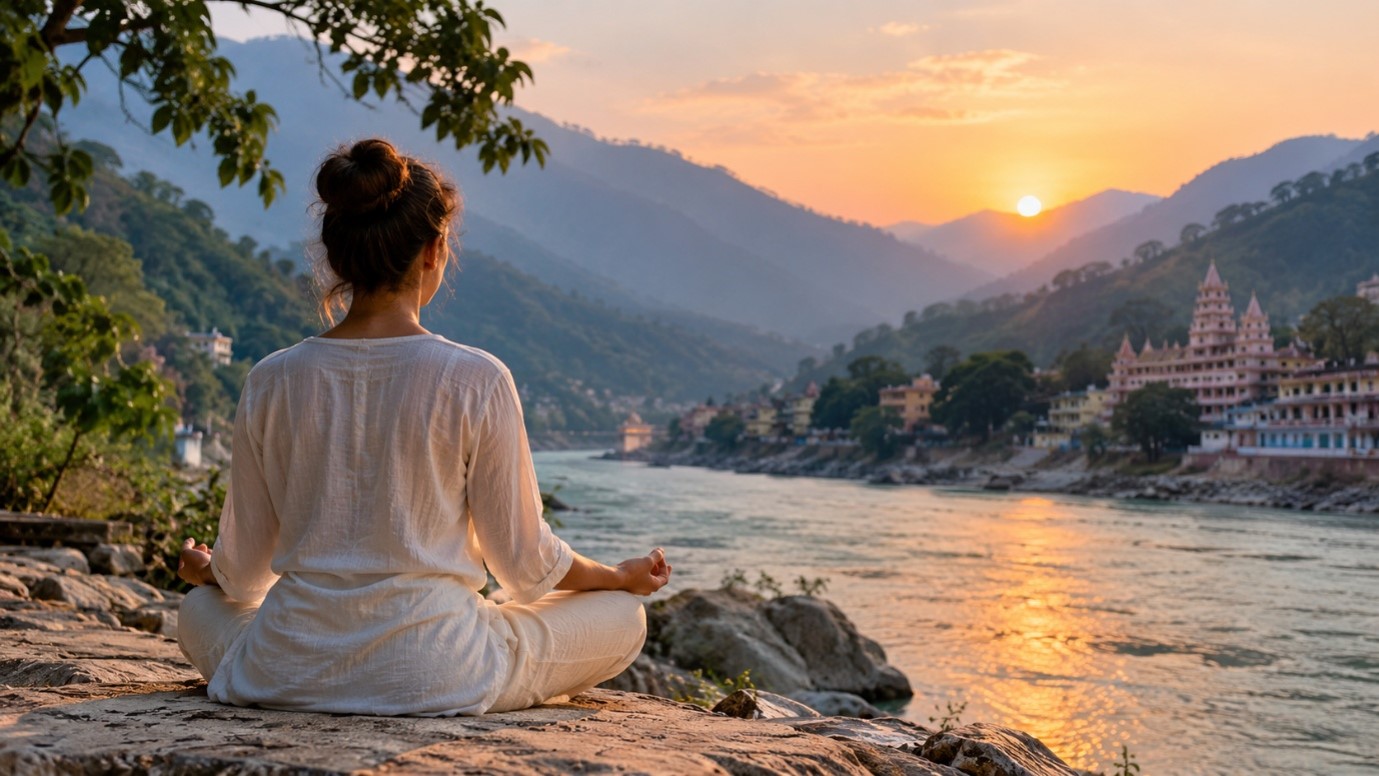
We live in a world that rarely asks us to be still.
There is always something to read, watch, answer, plan, achieve or worry about. Even when the body is sitting quietly, the mind may be moving through conversations, memories, future plans and unfinished tasks. For many people, the first time they sit down to meditate, they discover just how active the mind actually is.
This can lead to a common misunderstanding. People often think that meditation means having a completely empty mind, stopping thoughts, or reaching a perfectly peaceful state. When that does not happen, they may conclude that they are simply not good at meditation.
But meditation is not necessarily about stopping the mind. It is about developing a different relationship with what happens in the mind.
With regular practice, meditation can become a way of observing thoughts without immediately following them, experiencing emotions without being completely carried away by them, and bringing greater awareness to the present moment. Modern research is also exploring how different forms of meditation and mindfulness may influence attention, emotional regulation, stress and overall wellbeing, although the effects vary depending on the practice and the individual.
In the yogic tradition, meditation goes even deeper. It is not simply a relaxation technique. It is part of a larger process of understanding the mind, attention, awareness and ultimately the nature of one's own experience.
Table of Contents
1. What Is Meditation?
Meditation is a broad term used for a wide range of practices that train attention, awareness or the relationship between the mind and its experiences. Some forms involve focusing on the breath, a sound, a mantra or a particular sensation. Other approaches cultivate open awareness, where thoughts, emotions and sensations are observed without deliberately holding onto any one of them.
Because there are so many different traditions, meditation does not have one single technique or definition. A Buddhist mindfulness practice, a yogic meditation on the breath, a mantra meditation, a devotional practice and a contemplative practice may look very different from one another.
What connects many of these practices is the intentional training of attention and awareness.
Instead of allowing the mind to move automatically from one thought to another, meditation creates an opportunity to notice what is happening. Over time, this simple act of noticing can become a powerful form of self-observation.
2. Why Is It So Difficult to Sit Still?
One of the first things people discover when they begin meditation is that sitting still does not necessarily make the mind still.
You may sit down with the intention of focusing on your breath, only to remember an email you need to send. Then a conversation from yesterday appears in your mind. A few seconds later you may be thinking about dinner, a relationship, money, work or something that happened years ago.
This does not mean that meditation is failing.
In fact, noticing that the mind has wandered is part of the practice.
The moment you realise, "I was thinking about something else," awareness has already returned. You can then gently bring your attention back to the breath, mantra, sensation or chosen object of meditation.
This process may happen dozens or even hundreds of times during a meditation session. Each return is not a mistake. It is another opportunity to practise awareness.
3. Meditation Is Not About Stopping Your Thoughts
Perhaps the most common misconception about meditation is that the goal is to stop thinking.
Thoughts are a natural activity of the mind. Trying to force them to disappear can sometimes create another layer of struggle: "Why am I still thinking? Why can't I stop?"
Meditation offers another possibility.
Instead of fighting every thought, you learn to recognise it as a thought. A thought can arise without requiring you to follow it.
Imagine sitting beside a river and watching leaves floating downstream. You do not need to jump into the river to understand where every leaf is going. You can simply observe it passing.
Meditation can develop a similar relationship with mental activity. A thought appears, you notice it, and you allow it to move on.
This does not mean becoming detached from life or suppressing emotions. It means creating a little more space between what arises within you and how you automatically respond to it.
4. What Happens When You Meditate?
Meditation can feel different from one day to another.
Sometimes the mind may feel relatively quiet. At other times, it may seem unusually active. You may experience physical sensations, emotions, memories, restlessness, sleepiness or moments of clarity.
There is no single experience that proves whether meditation is "working."
One important aspect of meditation is the development of awareness. You begin to notice patterns that may normally remain hidden because you are moving too quickly through your day.
For example, you may notice that certain thoughts repeatedly appear when you are tired. You may recognise how quickly you react to criticism, how often you anticipate future problems, or how difficult it is to remain with an uncomfortable feeling.
Meditation does not necessarily remove these patterns immediately. Instead, it can help you see them more clearly.
And what you can see clearly, you have a greater opportunity to work with consciously.
5. Attention, Awareness and the Mind
Two words are particularly important when understanding meditation: attention and awareness.
Attention is the ability to place the mind on something. You can direct your attention towards your breath, a mantra, a sound or a physical sensation.
Awareness is broader. It allows you to recognise what is happening within and around you.
For example, during a meditation you may place your attention on the breath. Then you notice that a thought has appeared. The thought becomes part of your awareness, but you do not necessarily need to make it the new object of your attention.
This distinction becomes increasingly useful with practice.
You begin to realise that you can notice a thought without becoming completely absorbed in it.
That small difference can change the way you experience your own mind.
6. What Is the Difference Between Meditation and Mindfulness?
Meditation and mindfulness are closely related, but they are not exactly the same thing.
Meditation generally refers to a formal practice in which you intentionally train attention or awareness. Mindfulness is often described as maintaining awareness of present-moment experience without immediately judging or reacting to it.
A meditation session may involve mindfulness, but mindfulness can also be practised during everyday activities.
You can eat mindfully, walk mindfully, listen to someone mindfully or notice your breath while waiting for an appointment.
The deeper principle is learning to actually experience what is happening instead of constantly living in thoughts about what happened before or what may happen next.
7. Meditation and the Nervous System
You may have heard meditation described as a way of "resetting the nervous system." This phrase is popular, but it can sometimes make meditation sound more mechanical than it really is.
Meditation does interact with processes related to attention, arousal, stress and emotional regulation, but different practices can have different effects. Research on mindfulness and meditation has found potential benefits for stress, anxiety, depression and sleep in some populations, although the evidence is not equally strong for every outcome or every type of meditation.
One reason meditation may feel calming for some people is that it gives them an opportunity to step out of continuous mental engagement and observe their experience without immediately reacting.
However, meditation should not be understood as a guaranteed switch that moves the body from stress into relaxation every time.
Sometimes becoming quiet can actually make you more aware of feelings that were already present.
That is one reason meditation is not simply about relaxation.
8. Can Meditation Help With Stress and Anxiety?
Meditation and mindfulness have been studied extensively in relation to stress and anxiety.
Research suggests that mindfulness-based approaches can produce small to moderate improvements in some anxiety-related symptoms, although results vary and meditation should not be presented as a universal treatment for anxiety disorders.
A useful way to understand this is through the relationship between awareness and automatic reaction.
When we are stressed, the mind can become highly repetitive. We may continuously replay the past or anticipate possible problems in the future. Meditation gives us an opportunity to notice this process.
Instead of immediately believing every thought, we can begin to recognise, "This is what my mind is doing right now."
That recognition does not necessarily make the problem disappear. But it can create some distance from the automatic mental pattern.
9. Meditation and Emotional Awareness
Meditation can also change the way we relate to emotions.
Many people have learned to deal with difficult emotions by distracting themselves, suppressing them or immediately acting on them. Meditation creates a different possibility: noticing the emotion while allowing it to be present.
You may notice anger as heat in the body, sadness as heaviness in the chest, anxiety as movement in the abdomen or excitement as increased energy.
Instead of immediately creating a story around the emotion, you can first experience its physical and mental qualities.
This does not mean that every emotion should simply be tolerated without action. Some situations require boundaries, communication or practical change. Meditation simply gives us another moment of awareness before automatically reacting.
Research on mindfulness-based approaches has increasingly explored this relationship between mindfulness and emotional regulation. Recent reviews suggest potential improvements in some aspects of emotion regulation, while also highlighting the need to interpret the evidence carefully because study quality and outcomes vary.
10. Meditation and the Wandering Mind
The wandering mind is one of the most interesting parts of meditation practice.
You sit down intending to observe your breath, and within a few moments you are somewhere else entirely. Perhaps you are remembering something from the past or imagining something in the future.
This is normal.
The important part is not whether the mind wanders. The important part is what happens when you notice it.
You recognise the wandering, and you return.
That return is the training.
Research investigating mindfulness and cognition has produced mixed findings across different cognitive abilities, although some studies and meta-analyses suggest small improvements in certain aspects of attention and executive functioning.
So rather than saying meditation simply "makes you more focused," it is more accurate to say that meditation can provide structured practice in directing and returning attention.
11. Different Types of Meditation
There is no single meditation technique that is suitable for everyone.
Different practices work with different aspects of the mind.
Breath Meditation
The breath becomes the object of attention. You observe inhalation and exhalation and gently return your attention whenever the mind wanders.
Mindfulness Meditation
You develop awareness of thoughts, emotions, sensations and other present-moment experiences without immediately judging or reacting to them.
Mantra Meditation
A sound, word or phrase is repeated consciously. The repetition can provide stability for attention and may also have a devotional or spiritual dimension depending on the tradition.
Visualization Meditation
You use an image, symbol, colour or internal representation as the focus of meditation.
Chakra Meditation
Attention is directed towards traditional chakra centres, often combined with breath, visualization, mantra or awareness of particular qualities.
Loving-Kindness or Metta Meditation
The practice involves intentionally cultivating attitudes such as kindness, goodwill and compassion towards oneself and others.
Yoga Nidra
Yoga Nidra uses a guided process of awareness that may involve body rotation, breath awareness, visualization and deeper states of relaxation. It is related to yogic practices of awareness but is distinct from simply falling asleep or trying to relax.
The important point is that meditation is a large field. It is better to understand the purpose and method of a particular practice than to assume that every meditation technique produces the same experience.
12. Meditation in the Yogic Tradition
Meditation has deep roots in Indian philosophical and spiritual traditions.
In Yoga, meditation is not isolated from the rest of practice. The classical path described in the Yoga Sutras includes ethical foundations, personal observances, physical posture, regulation of breath, withdrawal of the senses, concentration, meditation and deeper absorption.
This provides an important context.
Meditation is not simply sitting down and trying to become peaceful. It can be understood as part of a gradual process of refining attention and developing a deeper understanding of the mind.
The yogic tradition also uses concepts that do not map directly onto modern scientific terminology. Ideas such as prana, samskara, vritti and chitta belong to a philosophical framework developed within Indian traditions.
They should not automatically be treated as scientific equivalents of concepts from neuroscience or psychology.
This distinction is important because traditional knowledge can be explored on its own terms while modern research can help us understand certain measurable aspects of meditation.
13. Dhyana: The Deeper Meaning of Meditation
In the Yoga Sutras, Dhyana is traditionally described as the seventh limb of the eight-limbed path of Yoga.
Before Dhyana comes Dharana, often translated as concentration or holding attention on a chosen object.
This distinction is subtle but important.
In Dharana, there is an intentional effort to maintain attention on the chosen object. With Dhyana, the practice becomes more continuous and less interrupted by distraction.
One way to understand the progression is to imagine placing a cup under a stream of water.
At first, the flow may be interrupted. Attention moves away and returns repeatedly. With practice, the flow becomes more continuous.
This is one reason meditation in the yogic tradition is much more than simply "relaxing."
It is a training in the continuity and refinement of awareness.
14. Meditation, Breath and Pranayama
Meditation and Pranayama are closely connected in many yogic practices, but they are not the same thing.
Pranayama involves specific approaches to breathing and the regulation of breath. Meditation primarily concerns attention, awareness and the relationship with mental activity.
The two can support one another.
For some practitioners, a few minutes of appropriate breathing practice makes it easier to sit quietly afterwards. For others, meditation begins directly with awareness of the natural breath without changing it.
This is why I often encourage people not to rush into complicated breathing techniques when they are beginning meditation.
First learn to observe.
Then learn to work with the breath consciously.
The breath can become a bridge between the body and the mind.
15. Meditation and Mantra
Mantra meditation offers another way of working with attention.
Instead of repeatedly trying to bring attention back to the breath, the practitioner uses a sound or phrase as the chosen object.
In traditional Indian practices, mantra can have linguistic, vibrational, devotional and spiritual significance. The meaning of the mantra can also be important, depending on the practice.
From a practical perspective, repetition gives the mind something specific to return to.
From a traditional perspective, mantra practice can be much deeper than concentration alone.
The appropriate approach depends on the mantra, lineage, intention and level of practice.
16. Meditation and Chakra Awareness
Chakra meditation is another practice found in modern yoga and in certain traditional Tantric and yogic systems.
The practitioner may bring attention to particular chakra centres, sometimes combining visualization, colour, mantra, breath and contemplation.
As with the chakra system itself, there are different traditional maps and interpretations. The seven-chakra model commonly used today is influential, but it should not be assumed that every Indian yogic tradition describes the subtle body in exactly the same way.
In a practical meditation setting, chakra awareness can provide a symbolic framework for exploring qualities such as stability, creativity, personal power, compassion, expression, insight and contemplation.
It is best approached as a traditional contemplative framework rather than as a claim that chakras are physical organs.
17. Why Beginners Often Feel They Are Doing It Wrong
One of the biggest obstacles to meditation is the belief that you should immediately feel peaceful.
A beginner may sit for ten minutes and experience thoughts, restlessness, discomfort and impatience. They may then say, "Meditation doesn't work for me."
But the presence of thoughts does not mean the practice has failed.
If you notice that the mind has wandered and gently return, you have already practised meditation.
If you notice irritation without immediately acting on it, you are practising awareness.
If you notice that you are becoming sleepy, you have learned something about your current state.
The practice is not always about creating a particular experience. Sometimes it is about learning to experience what is already happening with greater clarity.
18. A Simple Meditation Practice for Beginners
If you are completely new to meditation, you do not need to begin with thirty or sixty minutes.
Start with five to ten minutes.
Sit comfortably with your spine naturally upright. You can sit on the floor, on a cushion or on a chair. Close your eyes if that feels comfortable, or keep them softly open.
Bring your attention to the natural breath. Do not immediately try to change it. Simply notice the sensation of inhalation and exhalation.
After a few breaths, you will probably notice thoughts.
When you realise that your attention has moved away, do not criticise yourself. Simply recognise it and gently return to the breath.
Continue this process for several minutes.
At the end, do not immediately jump up and move on to the next activity. Take a few moments to notice how you feel.
The purpose of this simple practice is not to achieve a completely silent mind.
It is to practise returning.
19. What Does Modern Research Say About Meditation?
Modern research on meditation has grown considerably, but the scientific picture is more nuanced than many wellness claims suggest.
The National Center for Complementary and Integrative Health notes that meditation and mindfulness may have potential benefits for areas such as stress, anxiety, depression and sleep, while also emphasising that research quality and results vary across practices and conditions.
Research has also investigated attention and cognition. A 2023 meta-analysis of 111 randomized controlled trials involving more than 9,500 participants reported small to moderate improvements in several measures of cognitive performance with mindfulness-based interventions, although not every cognitive measure improved.
Other reviews have produced more mixed findings, particularly when examining specific cognitive abilities such as attention, working memory and long-term memory. This is an important reminder that meditation should not be presented as a guaranteed way to make the brain "better" in every measurable sense.
There is also increasing interest in emotional regulation. A recent systematic review and meta-analysis found evidence that mindfulness-based strategies can influence aspects of emotion regulation, although the researchers also noted methodological limitations and variability between studies.
In other words, the scientific evidence is promising in several areas, but meditation is not a single intervention with one predictable outcome.
The technique, duration, population, intention and context all matter.
20. When Meditation Should Be Practised With Guidance
Meditation is generally considered to have relatively few risks, but it is not necessarily comfortable or beneficial for everyone in every situation.
A systematic review of 83 studies involving 6,703 participants reported adverse experiences in some meditation practitioners, with anxiety, depression and cognitive difficulties among the commonly reported experiences. The authors also noted substantial variation between studies.
This does not mean that meditation is dangerous. It means that responsible teaching should acknowledge that inner practices can sometimes bring difficult experiences to the surface.
Someone experiencing significant psychological distress, trauma-related symptoms or other mental health difficulties may benefit from appropriate professional support alongside meditation rather than relying on meditation as a replacement for clinical care.
Similarly, intensive meditation retreats or advanced practices should not necessarily be approached in the same way as a five-minute beginner meditation.
Good guidance means understanding the person, the practice and the context.
21. My Approach to Meditation
In my teaching, I do not see meditation as a competition to see who can sit the longest or become the most peaceful.
For me, meditation begins with awareness.
Before asking someone to go deeper, I want them to understand what they are actually experiencing. Are they restless? Sleepy? Overthinking? Emotionally overwhelmed? Highly focused? Disconnected from the body?
These observations are valuable.
I also believe meditation should be adapted to the person. One student may benefit from breath awareness, another from mantra, another from a more structured guided practice, while someone else may first need movement or Pranayama before sitting quietly.
The goal is not to force the mind into silence.
The goal is to develop a more conscious relationship with the mind.
As that relationship changes, the practice can naturally become deeper.
22. Final Thoughts
Meditation is often presented as an escape from the mind.
I see it differently.
Meditation can be an opportunity to meet the mind more honestly.
You begin to notice how quickly thoughts appear, how emotions influence your behaviour, how often attention moves into the past or future, and how difficult it can sometimes be simply to remain with what is happening now.
With practice, you may begin to discover something important: you are not required to follow every thought that appears.
A thought can come and go.
An emotion can rise and change.
A sensation can appear and disappear.
And awareness can remain present through all of it.
This is one of the quiet powers of meditation.
You do not always need to change what is happening inside you. Sometimes the first step is simply to become aware of it.
And perhaps that is where stillness really begins.
Not when the mind becomes completely silent, but when you stop fighting with every movement of the mind and learn to sit with awareness.
You do not need to begin with an hour.
You do not need a perfect posture.
You do not need an empty mind.
You can simply sit.
Breathe.
Notice.
And return.
Again and again.
23. Frequently Asked Questions
How long should I meditate every day?
There is no universal ideal duration. For a beginner, five to ten minutes of consistent practice can be a reasonable starting point. As the practice becomes familiar, you can gradually increase the duration if it feels appropriate.
What if I cannot stop thinking during meditation?
That is completely normal. Meditation does not require you to stop every thought. Notice that you have become distracted and gently return your attention to your chosen object.
Is meditation the same as mindfulness?
They overlap, but they are not identical. Meditation usually refers to formal practices of training attention or awareness, while mindfulness can describe a quality of present-moment awareness that can also be cultivated during everyday activities.
Can meditation reduce stress?
Research suggests that mindfulness and meditation practices may help reduce perceived stress and some anxiety-related symptoms, although results vary between individuals and different types of practices.
Should I meditate with my eyes open or closed?
Both approaches can be used. Closed eyes may make it easier to reduce visual distractions, while a soft open gaze can be useful in some traditions. Choose the approach that supports your practice.
Is meditation a religious practice?
Meditation exists within many religious and spiritual traditions, including several Indian traditions, but meditation practices are also taught in secular settings. The intention, method and philosophical context determine how a particular meditation is understood.
Can I meditate before sleeping?
Some gentle meditation practices can be incorporated into an evening routine. However, meditation is not simply another word for sleep, and the appropriate technique depends on the person's intention and experience.
Do I need to sit cross-legged to meditate?
No. You can meditate sitting on a chair, on a cushion or in another stable and comfortable position. The posture should allow you to remain reasonably alert without unnecessary strain.